


Aquarelle Silk Pillowcase
Aquarelle Silk Pillowcase
Less friction. Better rest. The quiet upgrade to your evening ritual.
| Lab-Tested for Friction Reduction
| OEKO-TEX® Standard 100 Certified
| 100% Grade 6A Mulberry Silk
| Naturally Hypoallergenic


In stock
⛟ Free shipping over $75
Bundle & Save
Couldn't load pickup availability

Aquarelle Silk Pillowcase
Product Details
Product Details
Material: 100% 6A-Grade Mulberry Silk
Weave: 40 Momme, Double-Sided
Closure: Envelope closure
Certification: OEKO-TEX® Standard 100 certified
Colors: Black · Ivory White · Champagne Gold · Silver
Size: 48 x 74cm
Care: Machine washable, gentle cycle, 30°C max
Shipping
Shipping
We’re committed to fast delivery and top-notch service for every order. That’s why all orders enjoy worldwide quick, free shipping.
Shipping Times
We process orders in 1-2 business days.
Delivery typically takes 5-12 business days, depending on your state, excluding potential courier delays.
Money-Back Guarantee
Money-Back Guarantee
We’re excited to provide you with our rock-solid dedication to your satisfaction on every purchase. We’re certain you’ll adore our products, but if you’re not happy, reach out within 30 days of delivery for a FULL REFUND, no questions asked!



Why Aquarelle Silk?
Heavier Silk. Lighter Mornings.
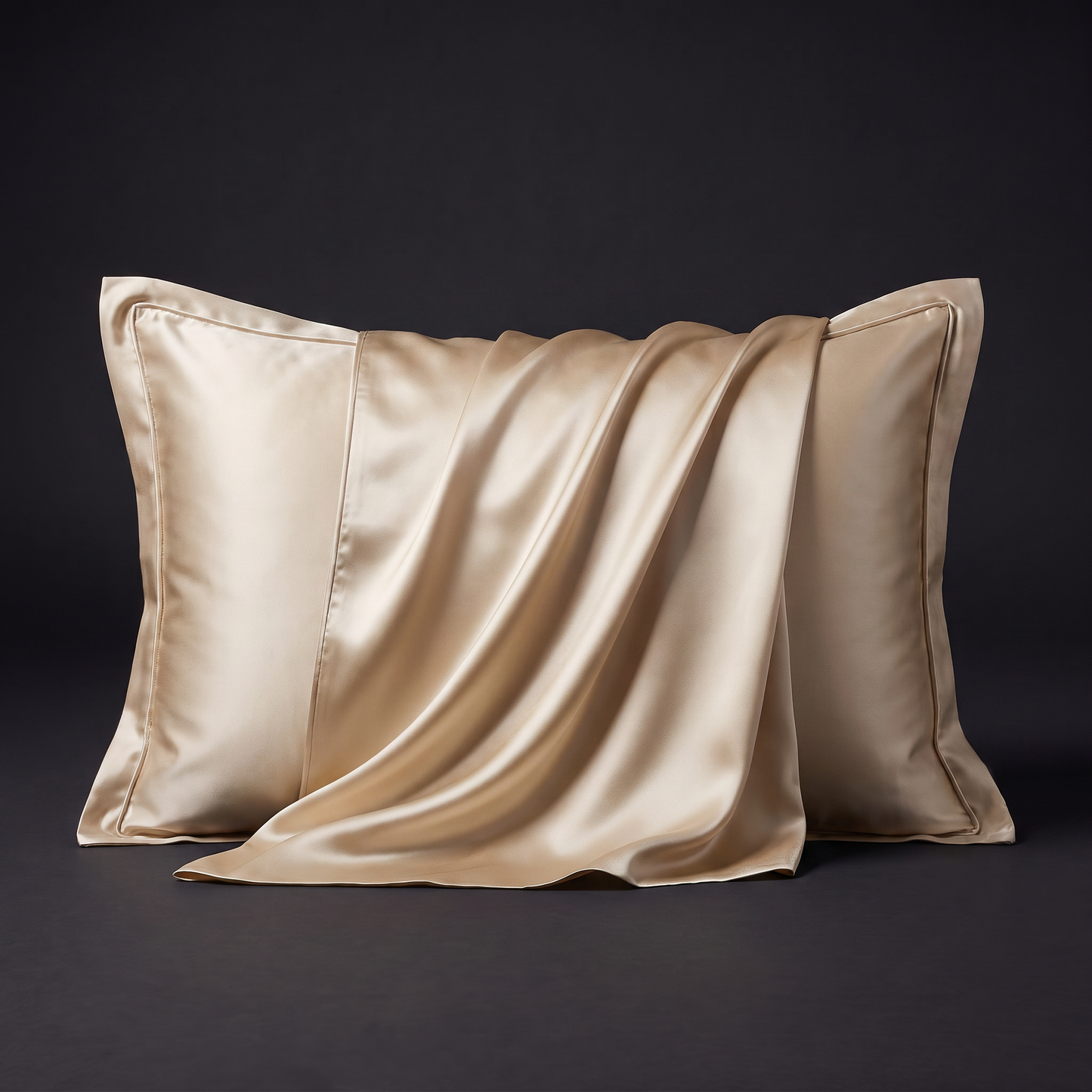
Most silk pillowcases run 19–22 momme — the industry entry point. Ours is 40 momme, double-sided, so every thread touching your skin and hair is genuine 6A-grade mulberry silk, not just a single treated face doing all the work. Heavier weight means a fabric that holds its shape, drapes better, and simply lasts — years longer than the thin, single-sided silk most brands sell as "luxury."
What does the Science say?
What the testing actually shows:

The Simplest Way to level up

Skin Benefits
Cotton pulls moisture out of your skin overnight — and pulls your $80 serum right along with it.
Silk absorbs far less, so more of what you apply before bed actually stays on your skin until morning, not soaked into your pillowcase. Less friction also means less tugging on delicate facial skin, night after night.

Hair Benefits
Silk doesn't grip your hair the way cotton does.
Less friction means less tugging, less breakage, and far fewer tangles by morning — lab-tested at 34% less friction than cotton. If you've ever woken up to a rat's nest no amount of brushing fixes fast, this is the fix. Works for every hair type, from pin-straight to tightly coiled.

Temperature Regulation
Silk is naturally breathable, so it doesn't trap heat the way synthetic fabrics do.
That means fewer overnight flips to the "cool side" of the pillow and a more consistent, comfortable sleep temperature — whether it's the dead of summer or the middle of winter.

Allergy Resistance
Silk is naturally hypoallergenic
and resistant to dust mites, mold, and other common allergens — unlike cotton and synthetic fabrics, which hold onto them. If you deal with nighttime sneezing, congestion, or sensitive skin, your pillowcase might be part of the problem, and silk is part of the fix.
The Difference Is in the Details
Why thousands of people are choosing silk over cotton.

96%
saw an less hair tangling
93%
reported a significant reduction in hair frizz
92%
noticed improvement in skincare longevity
* Based on a four-week independent customer panel
Everything you need to know about reclaiming your skin and hair whilst maintaining a good nights sleep.
Everything You're Probably Wondering
Is silk actually better than cotton for my hair?
Is silk actually better than cotton for my hair?
Yes — this is the strongest evidence in the category. Lab testing shows silk reduces friction on hair by up to 34% compared to cotton. Less friction means less tugging, less breakage, fewer tangles, and smoother hair in the morning. Works for every hair type.
Will a silk pillowcase get rid of my wrinkles?
Will a silk pillowcase get rid of my wrinkles?
Honest answer: we can't promise that, and no brand honestly can. Sleep creases are caused by friction and pressure against your pillow — silk creates less of both. What we can say is your skin experiences less mechanical stress on silk than on cotton, every night. That's a real benefit, just not a magic one.
Does it really keep my skincare on my skin instead of my pillow?
Does it really keep my skincare on my skin instead of my pillow?
Silk absorbs less moisture than cotton — that's a documented material fact. So more of your night serum or cream stays where you applied it, rather than soaking into the fabric. It's a genuinely reasonable benefit, backed by how the materials behave.
How do I wash it without ruining it?
How do I wash it without ruining it?
Machine wash on gentle/delicate, 30°C or below, with a silk-safe or pH-neutral detergent — skip the bleach, enzymes, and fabric softener. A mesh laundry bag helps. Air dry flat rather than tumble drying, and it'll easily last 2–3 years.
How is this different from a "satin" pillowcase?
How is this different from a "satin" pillowcase?
Satin isn't a material — it's a weave, and most "satin" pillowcases are actually polyester. Ours is 100% mulberry silk. Polyester can look similar on the surface, but it doesn't breathe, regulate temperature, or resist allergens the way real silk does.
Is it safe for sensitive skin?
Is it safe for sensitive skin?
Yes. Silk is naturally hypoallergenic and resistant to dust mites and common allergens. Ours is also OEKO-TEX® Standard 100 certified — independently tested for over 1,000 harmful substances. If you have a known silk allergy specifically (rare, but it exists), patch-test first.
Why does silk cost more than a regular pillowcase?
Why does silk cost more than a regular pillowcase?
Genuine mulberry silk requires specialized cultivation and skilled manufacturing — there's no cutting corners on quality here. Spread across 2–3 years of nightly use, it works out to roughly $0.10 a night for something touching your skin and hair for 7+ hours every single day.


